
Pomegranate, Gut Bacteria & Urolithin A: The Science You Need to Know
There's a lot more to pomegranate than antioxidants.
For years, pomegranate has been celebrated for its impressive antioxidant content. And while that's interesting, there's something happening inside your gut that deserves far more attention.
It involves your gut bacteria, a group of plant compounds called polyphenols, and a fascinating metabolite known as urolithin A.
If you follow the biohacking or longevity space, you might have heard of urolithin A already.
But here's something you might not know.
Your gut bacteria can actually produce it from certain compounds found in foods like pomegranate.
And the most interesting part? Not everyone's gut microbiome can do this equally well.
Let's get into the science.
First, what makes pomegranate so interesting?
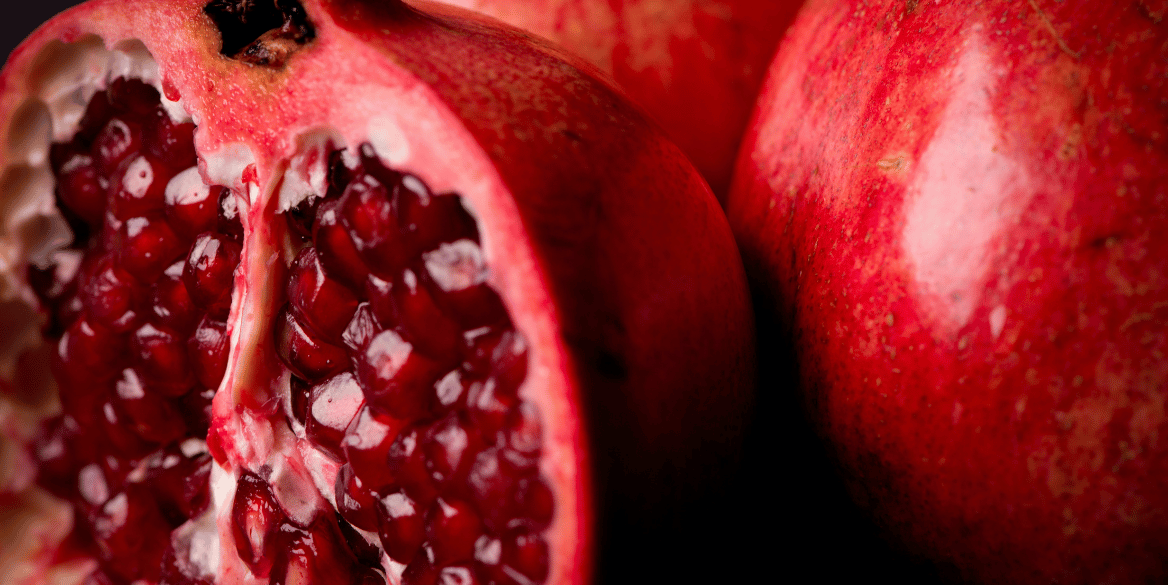
Pomegranate (Punica granatum) contains several naturally occurring plant compounds, including a group of polyphenols known as ellagitannins.
One of the best-known ellagitannins in pomegranate is punicalagin.
These compounds have attracted scientific attention because of how they interact with the gut microbiome.
When you consume pomegranate, its ellagitannins can break down into another compound called ellagic acid.
But the story doesn't end there.
Certain bacteria living in your large intestine can metabolise ellagic acid into an entirely different group of compounds called urolithins.
One of these is urolithin A.
In other words, your gut microbes aren't simply along for the ride when you eat.
They're actively involved in transforming compounds from your food into new substances.
Pretty clever, right?
What exactly is urolithin A?
Urolithin A is a naturally occurring metabolite produced when certain gut bacteria break down ellagitannins and ellagic acid.
Unlike vitamins or minerals, urolithin A isn't something you typically consume directly through everyday foods.
Instead, your gut microbiome may produce it from specific dietary compounds found in foods such as:
-
Pomegranate
-
Walnuts
-
Raspberries
-
Strawberries
-
Certain other berries and nuts
Urolithin A has become a topic of interest in longevity and biohacking research.
Scientists are investigating its relationship with mitochondrial function, cellular processes and healthy ageing.
Mitochondria are the structures inside your cells responsible for producing much of the energy your body uses.
One area of research focuses on a process called mitophagy, which involves the breakdown and recycling of damaged mitochondria.
While these findings are interesting, it's important to distinguish research involving urolithin A itself from research involving foods containing its precursors.
Consuming pomegranate doesn't guarantee that your body will produce urolithin A, or that you'll experience the outcomes being investigated in urolithin A studies.
And that brings us to one of the most fascinating parts of the research.
Not everyone produces urolithin A. Your gut bacteria help determine why.
Here's where things get really interesting.
Two people can consume the same pomegranate-rich food and produce very different amounts of urolithin A.
Why?
Because their gut microbiomes are different.
Researchers have identified distinct patterns of urolithin production, known as urolithin metabotypes.
These broadly include:
-
Metabotype A: Individuals who primarily produce urolithin A.
-
Metabotype B: Individuals who produce urolithin A alongside other metabolites, such as isourolithin A or urolithin B.
-
Metabotype 0: Individuals who don't produce detectable amounts of the final urolithins under the conditions tested.
A 2021 study examined urolithin A production in 100 healthy adults following pomegranate juice consumption.
Only around 12% had detectable circulating urolithin A at baseline.
After consuming pomegranate juice, approximately 40% reached the study's threshold for high urolithin A production.
The remaining participants either produced smaller amounts or showed little detectable conversion.
That's a pretty striking example of how differently our gut microbiomes can process the same dietary compounds.
It also highlights why researchers are increasingly interested in the relationship between diet, gut microbiome composition and individual metabolic responses.
What does pomegranate extract actually do to your gut bacteria?
Urolithin A isn't the only interesting part of the pomegranate story.
Researchers have also investigated how pomegranate extract interacts with the composition and activity of the gut microbiome itself.
In a small human study published in 2015, researchers gave 20 healthy adults 1,000 mg of pomegranate extract daily for four weeks.
They found three different responses:
-
Nine participants who weren't producing detectable urolithin A initially began producing it after supplementation.
-
Five participants who were already producing urolithin A showed increased production.
-
Six participants did not develop detectable urolithin A production.
Researchers also observed changes in certain gut bacterial groups among participants who produced urolithin A.
The findings suggest an interesting relationship between pomegranate polyphenols, microbial composition and the production of urolithin metabolites.
However, the study was small, and its results shouldn't be assumed to apply to everyone.
The Akkermansia connection
If you've been following gut health research, you've probably come across a bacterium called Akkermansia muciniphila.
It's attracted considerable scientific interest because of its relationship with the intestinal mucus layer and wider gut microbiome ecology.
Interestingly, researchers have also observed a relationship between Akkermansia and urolithin A production.
In the 2015 pomegranate extract study, participants who produced urolithin A had substantially higher levels of Akkermansia than those who didn't.
This doesn't mean pomegranate extract automatically increases Akkermansia.
It also doesn't mean Akkermansia alone determines whether someone produces urolithin A.
But it adds another interesting piece to the growing research into how different gut microbes interact with dietary polyphenols.
And it reinforces a point worth remembering:
Your gut microbiome does more than help digest food. It's involved in an extraordinary range of chemical transformations.
Pomegranate polyphenols and short-chain fatty acids
There's another interesting area of research worth discussing.
Short-chain fatty acids, or SCFAs, are compounds associated with microbial activity in the gut.
You've probably heard of butyrate, but acetate and propionate are two other important SCFAs.
In a 2023 randomised, placebo-controlled pilot study, researchers investigated a standardised pomegranate extract in healthy adults over four weeks.
They observed changes in the abundance of several bacterial species, including some associated with short-chain fatty acid production.
They also reported an increase in circulating propionate.
However, overall gut microbial diversity did not significantly change, and the observed increase in urolithin A was not statistically significant.
These findings are promising areas for further investigation, but larger studies are needed to establish their significance.
So, why did we include pomegranate extract in Restore?
When formulating Restore, we wanted to look beyond the usual gut health ingredients.
Prebiotic fibre and probiotics were important parts of the formula, but we were also interested in the relationship between plant polyphenols and the gut microbiome.
Pomegranate extract stood out because of its naturally occurring polyphenols and the research investigating how these compounds interact with intestinal bacteria.
The science surrounding ellagitannins, microbial metabolism and urolithins is particularly fascinating.
It's an example of how the relationship between food and gut health can be more complex than simply counting grams of fibre or adding probiotic bacteria.
That's why pomegranate extract earned its place alongside Restore's other carefully selected ingredients.
Meet Restore
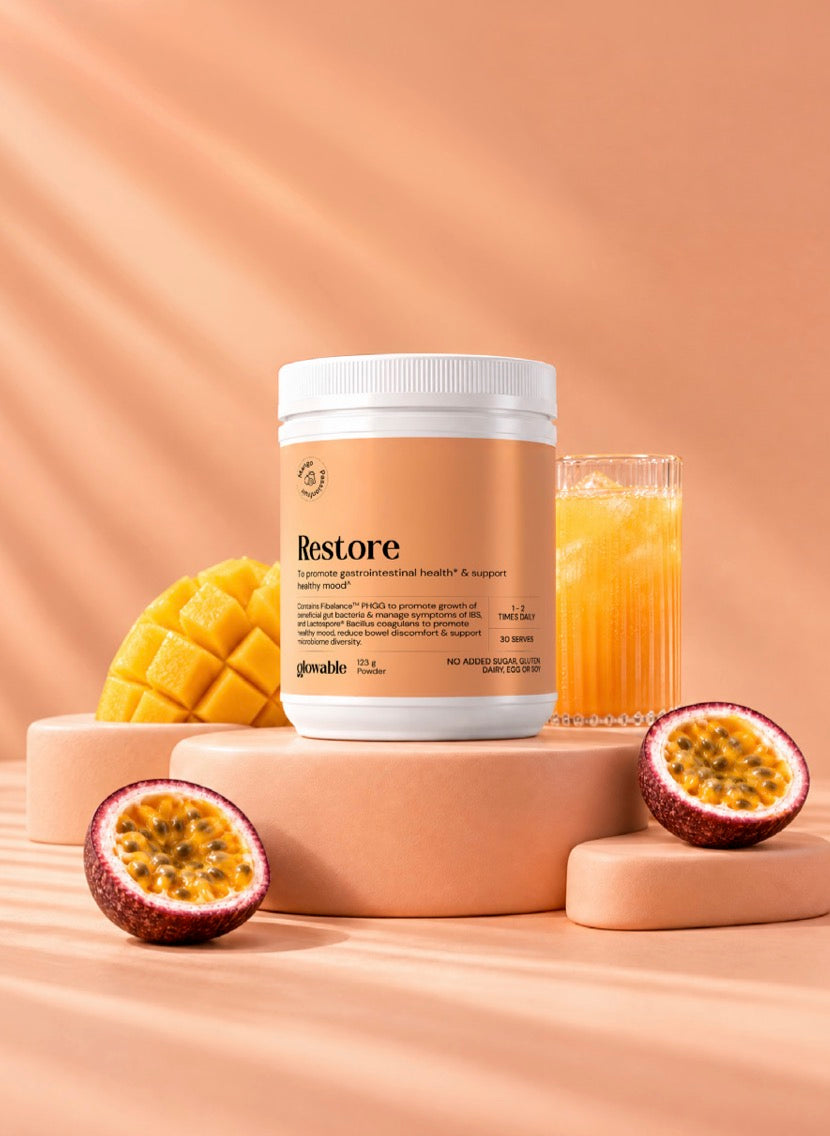
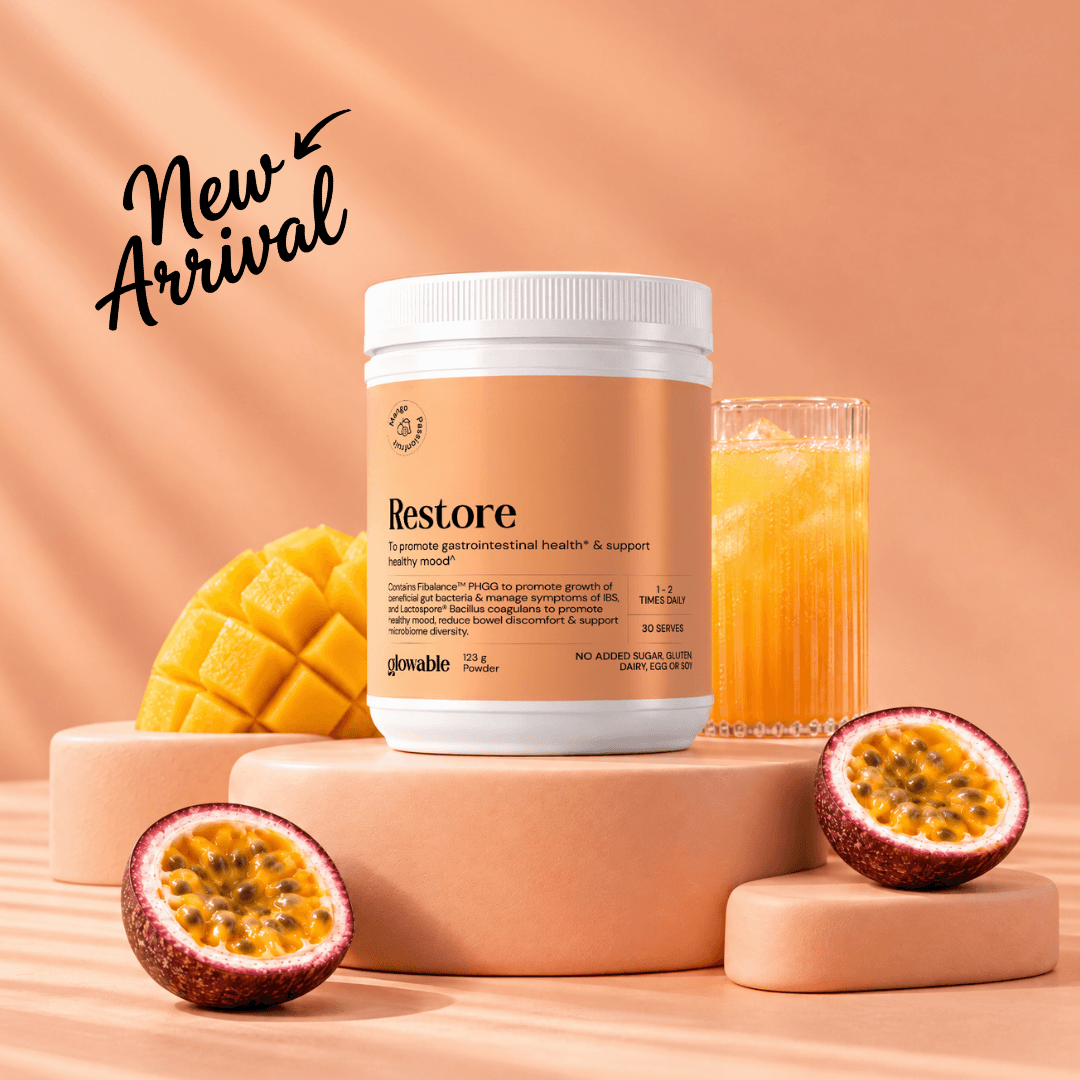
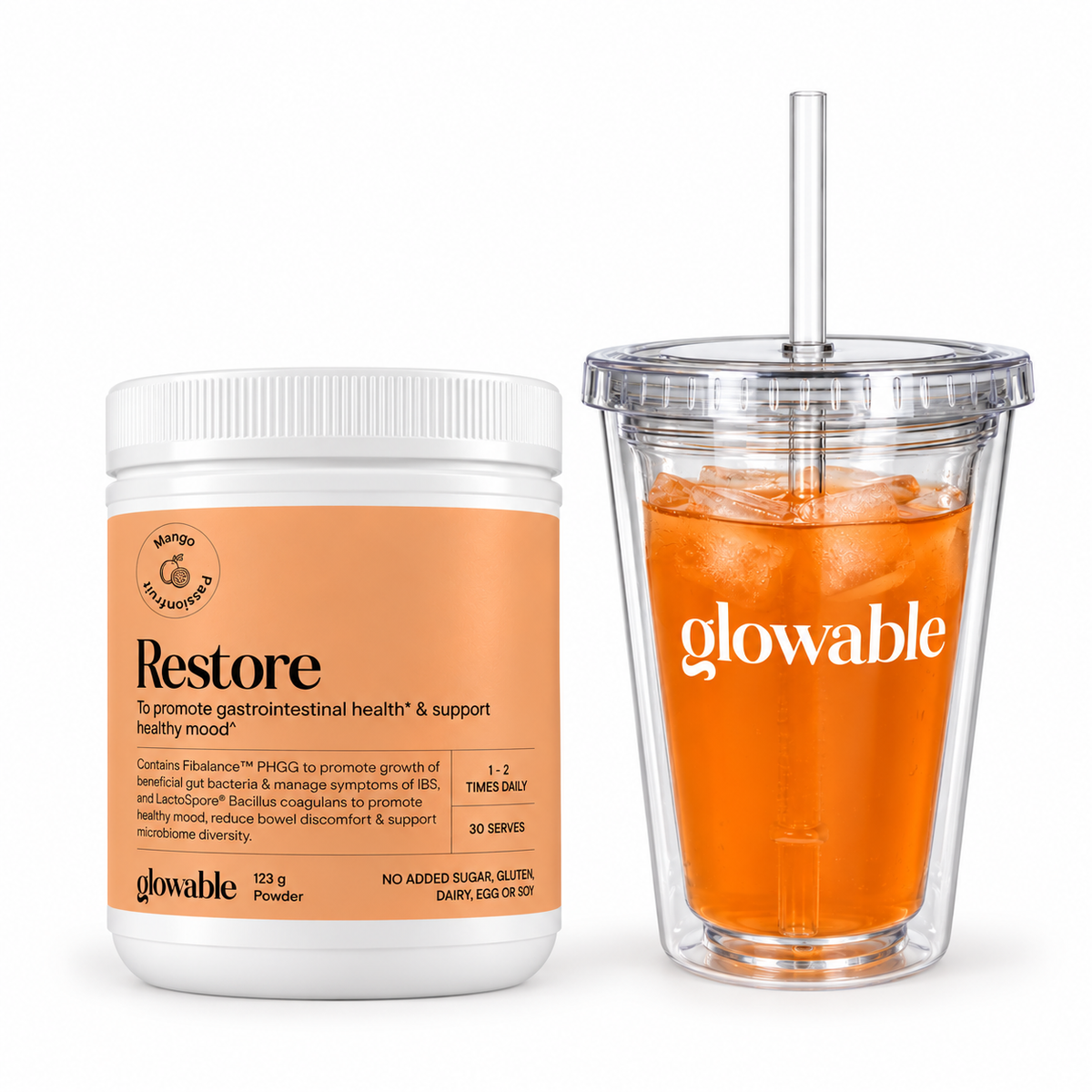
Restore is our naturopath-formulated Mango Passionfruit gut health powder.
It brings together:
-
Partially Hydrolysed Guar Gum (PHGG): A low FODMAP prebiotic fibre.
-
LactoSpore® Bacillus coagulans: A probiotic ingredient.
-
Pomegranate extract: A source of plant polyphenols.
-
L-Threonine: A naturally occurring amino acid found in the intestinal mucosa.
Each ingredient was selected with the gut microbiome and digestive health in mind.
Because gut health is about more than just taking a probiotic and hoping for the best.
The bottom line
Pomegranate deserves more attention than it gets.
Yes, it's rich in interesting plant compounds.
But the interaction between those compounds and the gut microbiome is where the science becomes particularly fascinating.
Certain gut bacteria can transform pomegranate polyphenols into metabolites like urolithin A.
Researchers are also investigating how pomegranate extracts interact with gut bacterial populations and microbial metabolites.
We're still learning how these interactions translate into meaningful human health outcomes.
And although the research is evolving, it offers an interesting reminder of just how much happens inside your gut after you eat.
Sometimes, the most fascinating part of your food isn't what it contains. It's what your gut bacteria do with it.
References
-
Li Z, et al. (2015). Pomegranate extract induces ellagitannin metabolite formation and changes stool microbiota in healthy volunteers. Food & Function. Read study
-
Singh A, et al. (2022). Direct supplementation with Urolithin A overcomes limitations of dietary exposure and gut microbiome variability in healthy adults to achieve consistent levels across the population. European Journal of Clinical Nutrition. Read study
-
Sivamani RK, et al. (2023). Prospective Randomized, Double-Blind, Placebo-Controlled Study of a Standardized Oral Pomegranate Extract on the Gut Microbiome and Short-Chain Fatty Acids. Foods. Read study
-
Urolithins: A Comprehensive Update on their Metabolism, Bioactivity, and Associated Gut Microbiota. (2022). Read review