

PHGG: The Gut-Friendly Fibre You Probably Haven't Heard Of (But Should)
Why this clinically studied prebiotic fibre earned its place in Restore, and what the research says about bloating, bowel regularity and your gut microbiome.
Let's talk about fibre.
Not exactly the sexiest topic. But if you're constantly bloated, struggling with unpredictable bowel movements or feeling like your digestion has a mind of its own, it's worth paying attention to.
And no, the answer isn't necessarily eating more bran, adding another tablespoon of chia seeds to your breakfast or forcing down a thick, gritty fibre supplement.
Because here's something that often gets overlooked:
Not all fibre works the same way. And when it comes to gut health, the type of fibre you consume matters.
That's exactly why we included Partially Hydrolysed Guar Gum (PHGG) in Restore.
It's a clinically researched prebiotic fibre with some particularly interesting benefits for the gut microbiome, digestive comfort and bowel regularity.
Let's get into the science.
First, what exactly is PHGG?
PHGG stands for Partially Hydrolysed Guar Gum.
It's a soluble dietary fibre derived from the guar bean, a legume grown primarily in India and Pakistan.
Through a process called enzymatic hydrolysis, the long carbohydrate chains in guar gum are broken into smaller pieces.
The result?
A highly soluble, low-viscosity fibre that mixes easily into liquids without creating that thick, gelatinous texture associated with some traditional fibre supplements.
But what makes PHGG particularly interesting isn't how well it dissolves.
It's what happens when it reaches your large intestine.
Unlike carbohydrates that are digested and absorbed in the small intestine, PHGG largely passes through to the colon.
There, your gut bacteria get to work fermenting it.
And this is where things get interesting.
1. PHGG feeds the beneficial bacteria living in your gut
Your gut is home to trillions of microorganisms, collectively known as your gut microbiome.
These microorganisms play important roles in digestion, immune function and the production of compounds involved in maintaining a healthy intestinal environment.
But like any living organism, bacteria need food.
That's where prebiotics come in.
While probiotics introduce live microorganisms, prebiotics provide substrates that certain beneficial microorganisms can use.
Think of probiotics as the bacteria, and prebiotics as part of their food supply.
PHGG has been investigated for its ability to influence the composition of the gut microbiome.
A 2014 study published in the Journal of Nutritional Science and Vitaminology found that PHGG consumption stimulated populations of Bifidobacterium and butyrate-producing bacteria in the human large intestine.
These bacteria are of particular interest because of their roles in microbial fermentation and gut health.
And this is one of the key reasons we chose PHGG for Restore.
We wanted a formula that goes beyond simply adding bacteria to the gut.
We wanted to include an ingredient that also helps nourish the microbial community already living there.
2. PHGG supports the production of short-chain fatty acids
Here's where the science gets even more interesting.
When certain gut bacteria ferment dietary fibres like PHGG, they produce compounds called short-chain fatty acids (SCFAs).
Three important SCFAs are:
-
Butyrate: An important energy source for cells lining the colon.
-
Acetate: A common microbial fermentation product involved in several metabolic processes.
-
Propionate: A fermentation product involved in gut and metabolic signalling.
Butyrate is particularly interesting because it helps fuel colonocytes, the specialised cells lining your large intestine.
It also plays a role in maintaining the intestinal environment and supporting normal intestinal barrier function.
In a 2020 clinical trial called the PAGODA study, researchers investigated the effects of PHGG on 20 healthy adults.
They observed changes in gut bacterial populations alongside increased levels of metabolites, including butyrate and acetate.
The researchers also reported changes in bowel movements during supplementation.
These findings suggest that PHGG may influence not only which bacteria live in the gut, but also some of the compounds those bacteria produce.
Importantly, these are early mechanistic findings. They don't establish that PHGG repairs the gut lining or treats intestinal permeability.
Still, they highlight something important.
Supporting your gut microbiome isn't just about which bacteria are present. It's also about what those bacteria are doing.
3. PHGG has been studied for bloating and digestive discomfort
Let's be honest.
Being bloated by the end of the day is frustrating.
Especially when you've already tried eliminating gluten, cutting out dairy, eating healthier or adding more fibre.
Here's the catch.
Some fermentable fibres can increase gas production and worsen symptoms in sensitive digestive systems.
That doesn't make those fibres bad. It simply means that different fibres behave differently in the gut.
PHGG is particularly interesting because researchers have investigated its tolerability in people with irritable bowel syndrome (IBS).
In a 2016 randomised, double-blind, placebo-controlled trial, 121 people with IBS were assigned to receive either PHGG or a placebo.
The PHGG group received 6 grams daily for 12 weeks.
Researchers found statistically significant improvements in bloating and combined bloating-and-gas scores compared with placebo.
The study did not find significant improvements in overall IBS severity or quality-of-life scores.
That's an important distinction.
The findings were promising for bloating, but they don't mean PHGG resolves every IBS symptom.
A 2024 systematic review also examined guar fibre supplementation for IBS and functional bowel disorders.
Of the four randomised controlled trials included, two reported improvements in gastrointestinal symptoms.
The researchers concluded that guar fibre appeared promising, while acknowledging the need for more high-quality studies.
So, while PHGG isn't a magic fix for digestive discomfort, it has a growing body of research behind its potential role in digestive symptom management.
And for anyone who's ever felt worse after trying a fibre supplement, that distinction matters.
4. PHGG may support more regular bowel movements
When most people think of fibre, they think of constipation.
But bowel regularity isn't simply about going more often.
It's also about stool consistency, comfort and predictability.
Interestingly, PHGG has been investigated in people experiencing different bowel patterns.
A 2019 randomised, double-blind clinical trial examined PHGG in 44 adults with a tendency towards loose stools.
After three months, the researchers observed improvements in stool consistency compared with placebo.
They also identified changes in the gut microbiome, including increased levels of Bifidobacterium.
However, stool frequency did not significantly change.
Other research has examined PHGG in people experiencing constipation.
Together, these findings suggest that PHGG may help support bowel function in different circumstances, although individual responses vary.
This is one reason soluble fibres can be particularly interesting.
They do more than simply increase stool bulk.
Some also influence microbial fermentation and the intestinal environment.
5. PHGG is a low-FODMAP-friendly fibre
If you've ever followed a low-FODMAP diet, you'll know how restrictive it can feel.
Suddenly, foods you considered healthy become potential digestive triggers.
Garlic? Problematic.
Onion? Problematic.
Certain fruits, legumes and vegetables? Also potentially problematic.
And while a low-FODMAP diet can be useful for managing IBS symptoms, long-term restriction without proper guidance isn't the goal.
Here's where PHGG gets interesting.
PHGG is generally considered a low-FODMAP-friendly fibre option, although the suitability of a finished product depends on its full formulation and serving size.
Unlike certain rapidly fermented fibres, such as inulin and fructooligosaccharides (FOS), PHGG may be better tolerated by some people with sensitive digestion.
Monash University's FODMAP researchers have highlighted PHGG as a promising fibre for people with constipation-predominant and diarrhoea-predominant IBS.
They also note that more research is needed.
That doesn't mean PHGG can never cause gas or bloating.
Any fermentable fibre can cause digestive symptoms, particularly when introduced too quickly.
But its potential tolerability made it an especially interesting ingredient when formulating Restore.
So, why did we include PHGG in Restore?
When developing Restore, our goal wasn't to create another generic fibre supplement.
As a naturopath, I wanted to formulate something that considered the gut microbiome, digestive comfort and the intestinal environment together.
Because digestion is more complicated than simply eating more fibre or taking a probiotic.
The bacteria living in your gut need suitable nutrients.
The intestinal lining plays an important role in maintaining the gut's barrier function.
And bowel habits can be influenced by everything from diet and microbial activity to stress.
That's why Restore brings several carefully selected ingredients together.
PHGG (Fibalance™)
A clinically researched soluble prebiotic fibre selected for its effects on beneficial gut bacteria, microbial fermentation and bowel function.
LactoSpore® (Bacillus coagulans)
A probiotic strain included to complement the prebiotic component of the formula. Specific effects depend on the strain, dose and research conditions.
L-Threonine
An amino acid involved in protein synthesis and naturally present in intestinal mucins, which contribute to the protective mucus layer of the gut.
Pomegranate fruit extract
A source of polyphenols that interact with the gut microbiome. Certain gut microorganisms can metabolise pomegranate ellagitannins into compounds called urolithins.
Together, these ingredients reflect our approach to gut health.
Don't just think about the bacteria in your gut. Consider what you're feeding them and the environment they're living in.
It's a more considered approach to daily digestive support.
Is PHGG better than other fibres?
Not necessarily. Different fibres have different strengths.
Psyllium, for example, is a well-researched fibre that forms a gel when mixed with water.
Inulin is another prebiotic fibre, but its rapid fermentation can contribute to gas and discomfort in some people.
PHGG has a different set of characteristics:
-
It's water-soluble and low-viscosity.
-
It has documented prebiotic activity.
-
It has been studied for stool consistency and bloating.
-
It may be suitable for some people with sensitive digestion.
-
It dissolves easily into drinks without excessive thickening.
These features made it a strong fit for Restore.
We wanted a daily powder that was pleasant to drink and easy to incorporate into a routine.
Because even the most researched ingredient isn't particularly helpful if you hate taking it.
How long does PHGG take to work?
This is where consistency matters.
Gut bacteria respond to changes in their food supply, but meaningful changes aren't always immediate.
Clinical studies have investigated PHGG over periods ranging from several weeks to three months.
For example, the 2016 IBS trial observed improvements in bloating over a 12-week supplementation period.
The PAGODA trial also found that many microbiome-related changes diminished after PHGG supplementation stopped.
That reinforces why regular dietary habits matter.
A healthy gut microbiome isn't built around a single ingredient or supplement.
It responds to your overall diet, fibre intake and lifestyle over time.
When increasing fibre, it's generally sensible to start gradually and maintain adequate fluid intake.
The bottom line
If there's one thing we'd love more women to understand about gut health, it's this:
Your gut bacteria need feeding, too.
You can eat healthy meals, focus on protein and take probiotics.
But dietary fibre still plays a fundamental role in supporting your gut microbiome.
PHGG is an interesting example of how the right type of fibre may offer benefits beyond simply adding bulk to your stool.
Research has investigated its effects on beneficial bacteria, short-chain fatty acid production, digestive comfort and bowel habits.
And while there's still more to learn, the evidence makes PHGG a valuable ingredient to consider.
That's why we included Fibalance™ PHGG in Restore.
Not because it's the latest gut health trend.
Because the ingredient has a scientific rationale that fits the way we approach digestive health.
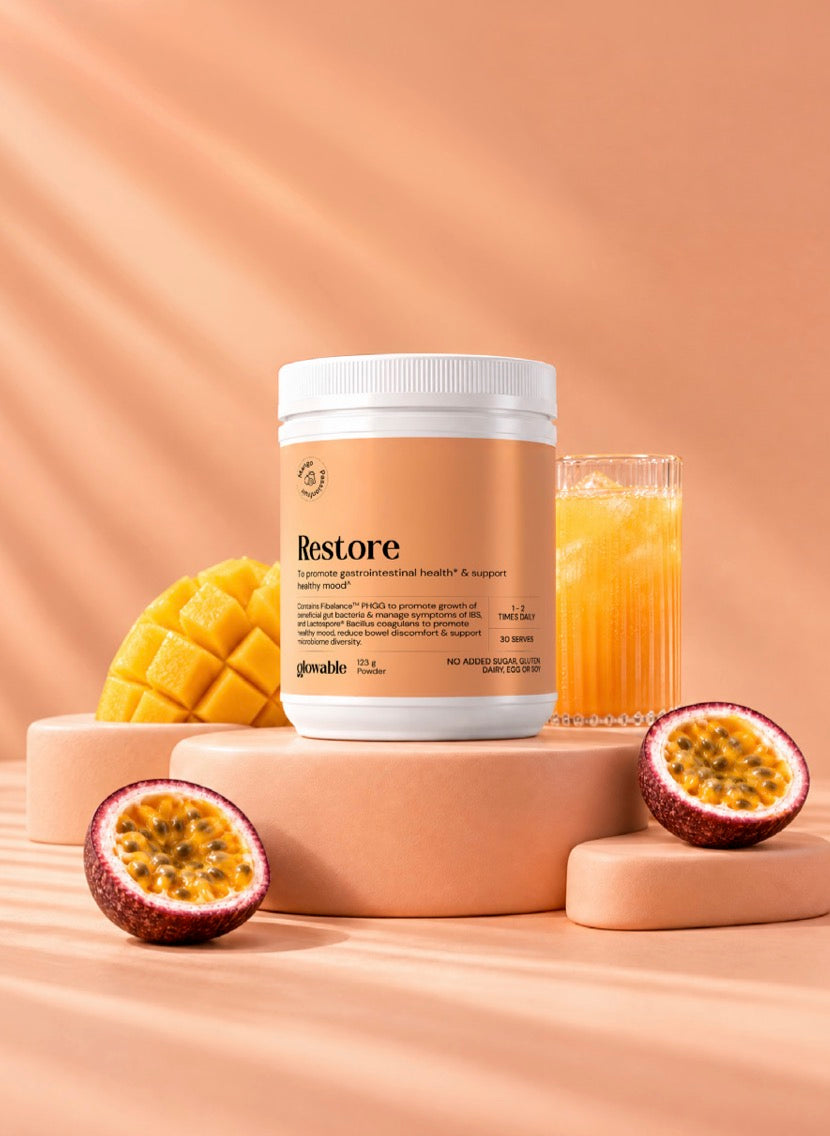
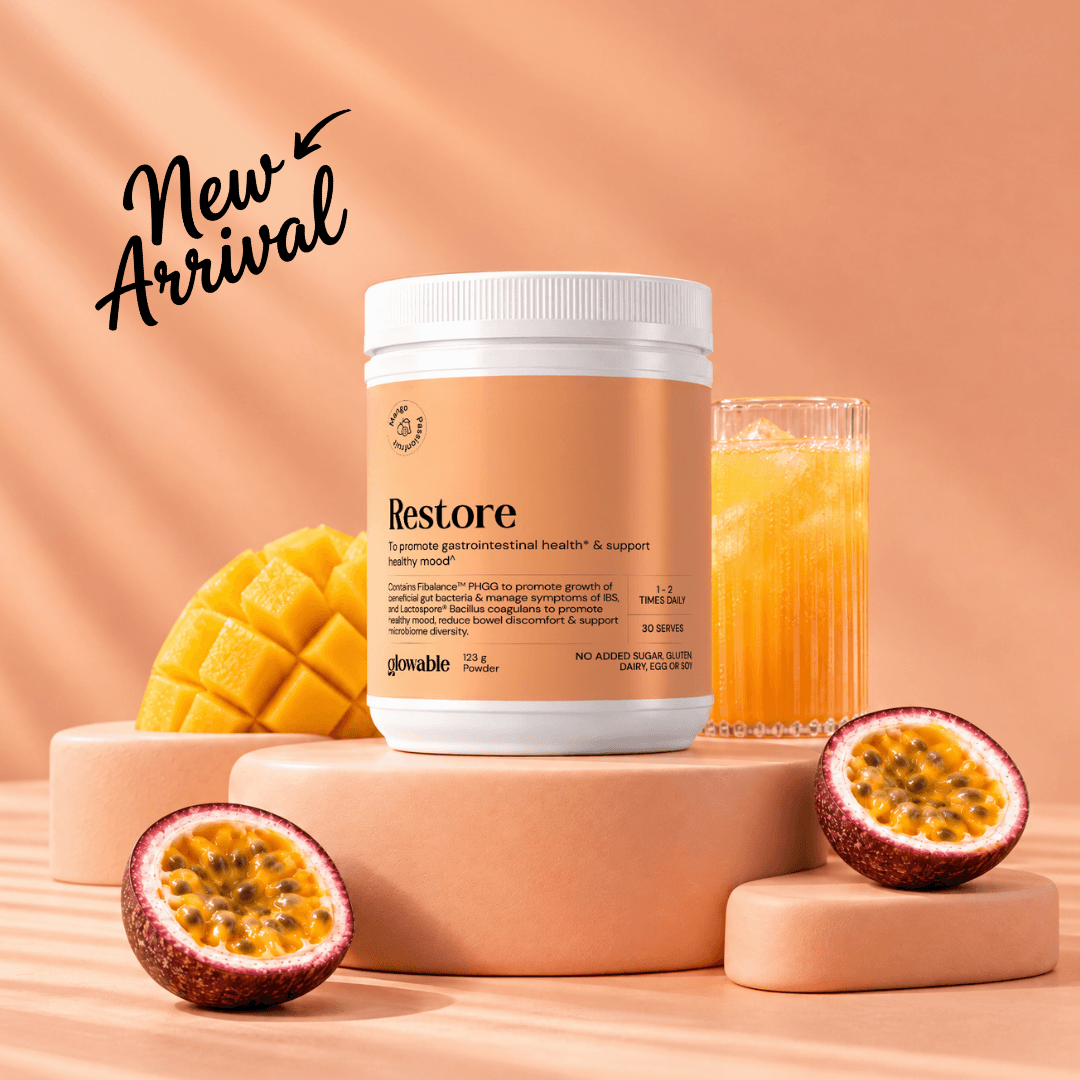
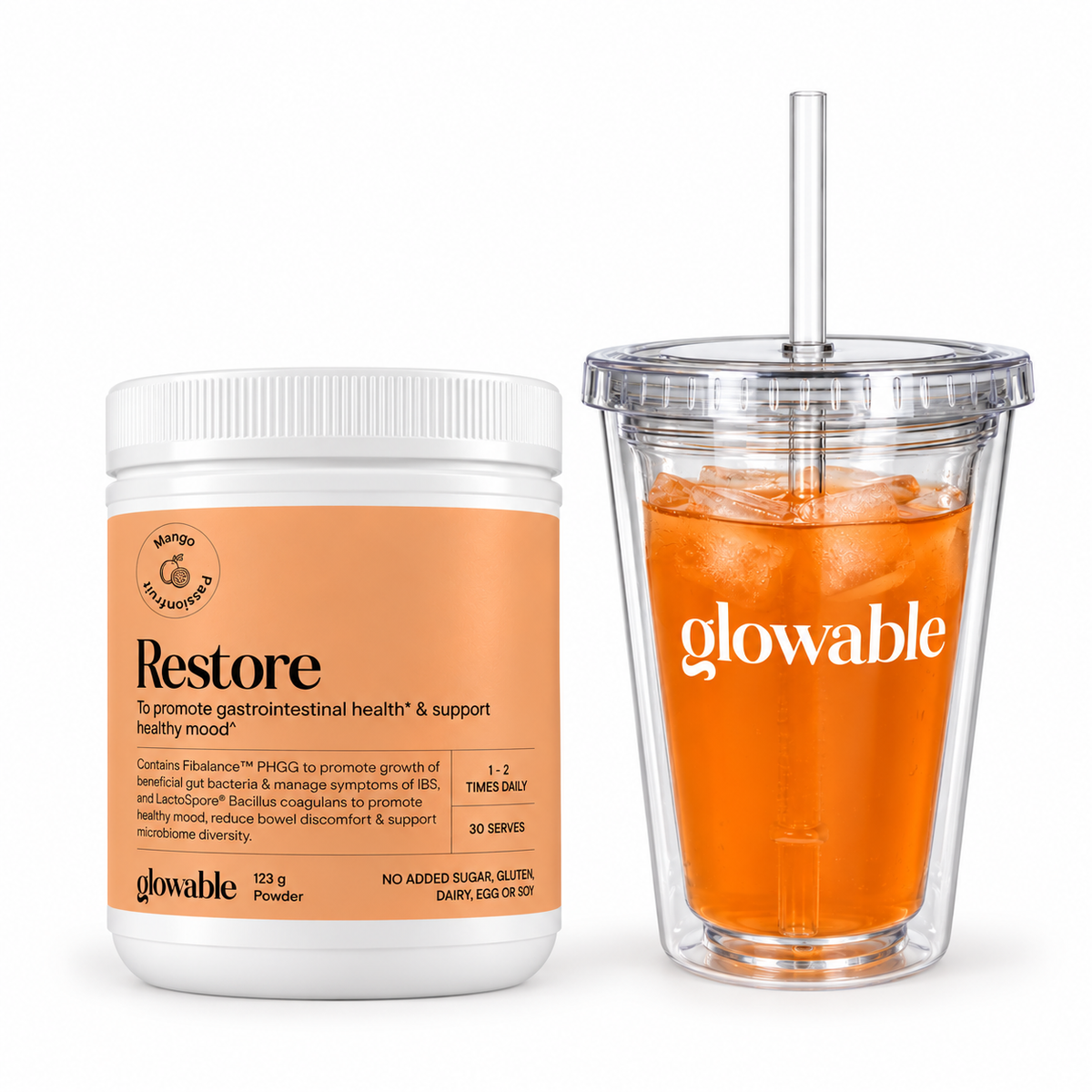
Meet Restore. Our naturopath-formulated Mango Passionfruit flavour gut health powder, combining prebiotic fibre, probiotics, amino acids and plant polyphenols.
Created for people who want to give their gut a little more attention.