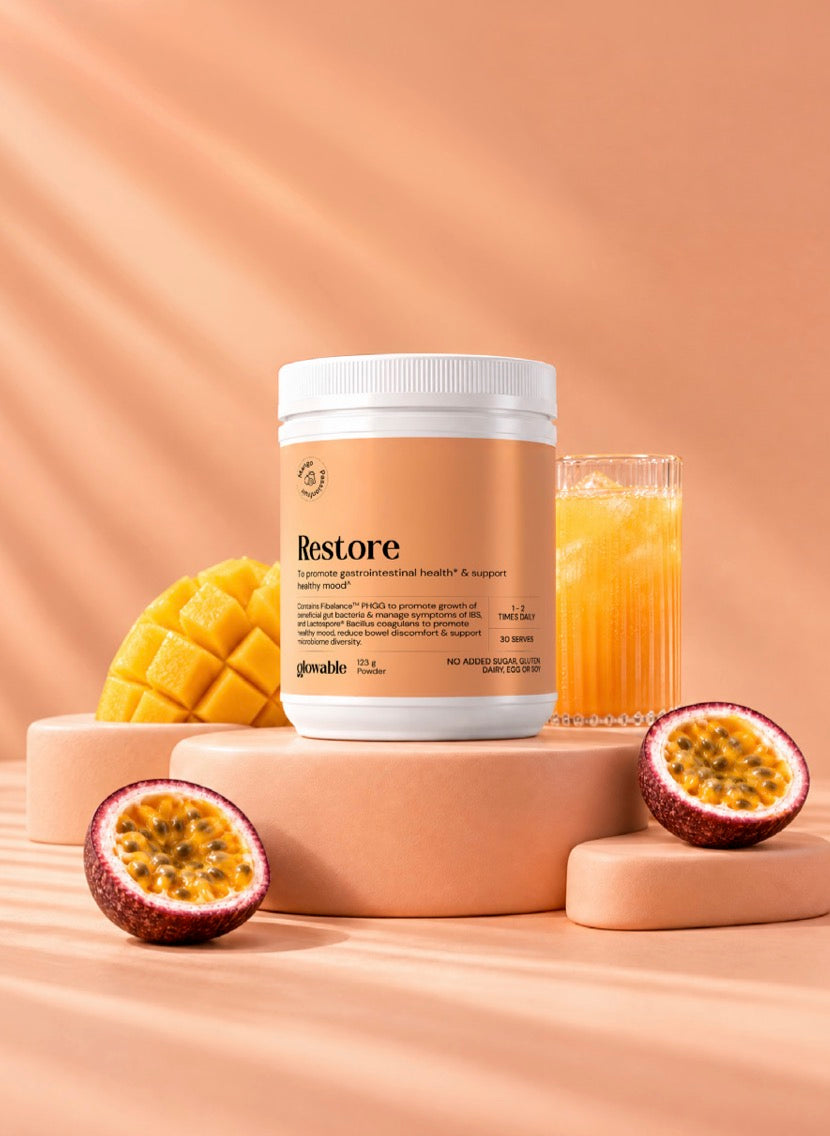
Best over-the-counter remedies for bloating available in Australian pharmacies: how Restore compares
When bloating keeps coming back, your gut deserves closer attention.
The uncomfortable pressure. The tight waistband. The frustration of eating well and still feeling swollen.
Searching for the best over-the-counter remedies for bloating available in Australian pharmacies brings up gas capsules, fibre supplements, probiotics and digestive medicines.
But recurring bloating needs more consideration than choosing something for today's discomfort.
Fermentation, your gut microbiome, bowel function and gut sensitivity all influence how your stomach feels. Understanding those connections helps explain why Glowable's Restore takes a broader nutritional approach.
What actually causes bloating?
Bloating describes abdominal fullness, pressure or stretching. Your abdomen may visibly expand, although discomfort can occur without obvious swelling.
Several processes can contribute at once.
Fermentation: a major contributor to gas and bloating
Gut microbes ferment carbohydrates that escape digestion or absorption in the small intestine. This includes certain sugars, fibres and resistant starches.
Fermentation produces gas. Some carbohydrates also draw water into the bowel. Together, gas and fluid can stretch the intestinal wall and trigger discomfort.
FODMAPs are a familiar example. These fermentable carbohydrates can aggravate bloating, gas and pain in susceptible people.
This explains why nutritious foods can still leave you uncomfortable. Your digestive tolerance matters alongside the nutritional value of your meals.
Healthy eating and comfortable digestion don't always arrive together.
Your microbial environment influences fermentation
Your gut contains a complex community of microorganisms. Their composition and activity influence how they process dietary carbohydrates.
Disruptions within this community are often described as dysbiosis. These may involve changes in microbial diversity, relative abundance or function.
Microbiome changes can contribute to digestive symptoms. However, bloating alone cannot identify a particular imbalance or diagnose dysbiosis. Microbial activity, bowel function and gut sensitivity interact.
A clinically considered approach examines that wider picture.
Constipation can worsen the pressure
Bowel function deserves attention whenever bloating becomes a regular problem.
Constipation can worsen abdominal pain, gas and distension.
An assessment should consider stool consistency, straining and incomplete emptying alongside frequency. Simply counting bathroom visits can miss useful information.
Gut sensitivity changes how stretching feels
Some people experience normal intestinal stretching more intensely.
This heightened sensitivity, known as visceral hypersensitivity, can make gas and fluid feel particularly uncomfortable.
That means the severity of bloating doesn't always reflect the amount of gas present.
Why temporary relief can leave the bigger picture untouched
Simethicone products help relieve gas-related discomfort. Antispasmodics help relieve stomach and bowel cramps.
Those actions address symptoms. They don't provide prebiotic nutrition, probiotic microorganisms or the complementary nutrients found in Restore.
Relieving today's pressure doesn't explain why it keeps returning.
Recurring symptoms deserve attention to food tolerance, bowel habits and possible underlying conditions. Daily nutritional support can form part of that broader approach.
Why adding more fibre can sometimes make bloating worse
Fibre supports digestive health, but different fibres behave differently.
Some ferment rapidly and can increase gas-related symptoms in sensitive people. Monash University identifies inulin and fructooligosaccharides as examples that may worsen these symptoms in people with IBS.
That doesn't make these fibres universally harmful. It means the type, amount and individual response matter.
The same consideration applies to prebiotic supplements. A product can feed gut microbes while still requiring careful attention to tolerance.
Fermentation also supports gut health
Fermentation is a normal digestive process. Gut microbes use dietary substrates and produce compounds that contribute to gut health.
Some gas production accompanies this beneficial activity. Eliminating fermentation entirely isn't a useful goal.
The aim is to nourish the gut while keeping symptoms manageable.
That's why Restore's formulation starts with a considered fibre choice.
What makes Restore different?
Restore combines four complementary ingredients: Fibalance™ PHGG, LactoSpore® Bacillus coagulans, pomegranate fruit extract and L-Threonine.
Together, they provide prebiotic fibre, a probiotic, plant polyphenols and amino acid nutrition in one daily powder.
Each ingredient contributes something specific.
Fibalance™ partially hydrolysed guar gum, or PHGG
Prebiotic nourishment with specific relevance to digestive comfort. PHGG is a soluble fibre that reaches the large intestine, where microbes ferment it. This activity helps nourish beneficial bacteria and produces short-chain fatty acids. Monash University identifies PHGG as potentially well tolerated in people with IBS. A placebo-controlled trial also found improvements in bloating and combined bloating-and-gas scores over 12 weeks. PHGG gives Restore a considered fibre foundation, with attention to both microbial nourishment and digestive tolerance. It still undergoes fermentation, so individual responses can vary.
LactoSpore® Bacillus coagulans
Targeted probiotic support with research examining gas and bloating. LactoSpore® contains the specific strain Bacillus coagulans MTCC 5856. A four-week placebo-controlled trial found improvements in gas-related digestive symptoms. A separate pilot trial in diarrhoea-predominant IBS reported improvements in bloating, abdominal pain and stool frequency. These findings give its inclusion a specific digestive purpose, supported by research on the strain itself. Alongside PHGG, it adds probiotic microorganisms to a formula that also provides prebiotic nourishment.
Pomegranate fruit extract
Polyphenols that interact with the microbial environment and provide material for useful microbial metabolites. Pomegranate contains ellagitannins, which certain gut bacteria can transform into urolithins, including urolithin A. A small human trial using a standardised pomegranate extract found changes in microbial composition and increased circulating acetate, propionate and urolithin A. This gives pomegranate a microbiome-focused role beyond its familiar antioxidant reputation. Urolithin production varies between people because it depends on their gut microbes.
L-Threonine
Essential amino acid nutrition relevant to the gut's protective mucus layer. Your body uses threonine to build proteins, including mucins. These proteins help form the mucus covering the intestinal lining, creating a protective interface between your gut tissue and its contents. Providing threonine adds a different nutritional dimension to Restore, alongside fibre, probiotics and polyphenols. Its role concerns the materials your body uses to maintain normal tissues. This physiological role doesn't establish that supplemental threonine repairs intestinal damage or directly relieves bloating.
Why PHGG deserves particular attention
Choosing a prebiotic requires consideration of what happens after you swallow it.
PHGG is fermented by gut microbes, supporting their activity and the production of short-chain fatty acids. These compounds form part of the relationship between dietary fibre, microbial metabolism and the intestinal environment.
Importantly for people comparing bloating products, PHGG has also been studied using digestive symptoms as outcomes.
In the placebo-controlled IBS trial, participants started with 3 grams daily, increasing to 6 grams. Bloating improved compared with placebo during the 12-week treatment period.
That supports a more informed discussion than simply recommending "more fibre".
The fibre choice matters. So does your response to it.
Why pomegranate's contribution goes beyond antioxidants
Your gut microbes transform some plant compounds into other biologically active substances.
Pomegranate provides material for this process. Its relationship with the microbiome runs both ways: its compounds can influence microbial activity, while your microbes determine which metabolites you produce.
Urolithin A is one metabolite attracting research interest. Studies of directly supplemented urolithin A have examined mitochondrial maintenance, including mitophagy. This is the process cells use to recycle damaged mitochondria.
Those studies don't establish that pomegranate extract produces equivalent effects. However, they help explain why microbial metabolism deserves attention when considering plant ingredients.
A simple daily routine
Restore brings these ingredients together in Mango Passionfruit flavour. The powder mixes into water and contains no added sugar, gluten or dairy.
One daily serving provides gut support, making it a practical option for people who prefer a drink to capsules.
The formulation gives the routine a clear purpose: consistent nutritional support for your gut.
Support your digestion beyond the scoop
A clinical naturopathic approach considers food, habits and symptoms alongside supplementation.
Start with a short record of meals, bowel movements and discomfort. Look for patterns before removing entire food groups.
If FODMAPs appear relevant, seek guidance through assessment and reintroduction. A structured approach helps identify personal tolerance and avoid unnecessary ongoing restriction.
Persistent bloating also deserves medical assessment. Seek prompt advice when it accompanies severe or ongoing pain, vomiting, blood in your stool, unexplained weight loss or feeling full unusually quickly.
Choose daily support with a clear purpose
Bloating can involve fermentation, microbial changes, bowel function and gut sensitivity.
Restore brings several nutritional considerations into one formula. PHGG provides prebiotic nourishment. LactoSpore® adds a researched probiotic. Pomegranate contributes microbiome-interacting polyphenols, while L-Threonine supplies essential amino acid nutrition.
For people seeking a considered daily gut-support formula, those choices matter.